Summary:
Yes, DWI cases are dismissed in Texas, and it happens more often than most people expect. Data from the Texas Department of Public Safety shows that defendants who plead not guilty and contest their charges see significantly better outcomes than those who plead guilty without fighting. Common grounds for dismissal include an unlawful traffic stop, lack of probable cause for the arrest, errors in breath or blood test procedures, chain-of-custody problems with chemical evidence, body camera footage that contradicts the police report, and officer failure to appear. When full dismissal is not achievable, reductions to lesser charges like obstruction of a passageway or reckless driving, or deferred adjudication, may still keep a DWI conviction off the record. But none of these outcomes happen automatically. They depend on the specific facts of the case, the quality of the legal review, and how early defense counsel gets involved.
What The Data Says About DWI Dismissals In Texas
One of the first things people search after a DWI arrest is whether it is even worth fighting the charge. The numbers suggest it is. According to publicly available data compiled from the Texas Department of Public Safety Crime Records Division, defendants who plead not guilty to DWI charges and choose to contest them see roughly one in three cases end in dismissal, a no-charge release, or a reduction to a lesser offense across the five largest Texas counties. That is not a guarantee for any individual case, but it does show that contesting a DWI charge produces meaningfully different outcomes than accepting guilt without a fight.
Dallas County is one of those five major counties, and its prosecutors do consider reductions and dismissals when the evidence has identifiable problems. Some offices are more willing than others to negotiate when the State’s case has technical weaknesses, but no prosecutor’s office in Texas is obligated to proceed with a case they cannot prove beyond a reasonable doubt. That burden never shifts. The question is whether the defense identifies the weaknesses early enough to use them.
Why An Unlawful Traffic Stop Can Collapse The Entire Case
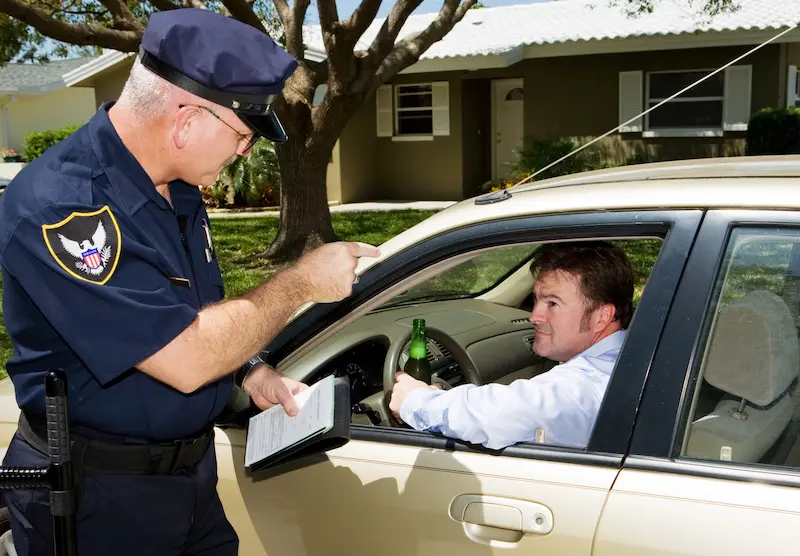
The Fourth Amendment to the U.S. Constitution prohibits unreasonable searches and seizures, and in Texas, that protection applies from the very first moment an officer activates the lights. A law enforcement officer must have reasonable suspicion of a traffic violation or criminal activity before initiating a stop. If the stop was not legally justified, everything that follows, the officer’s observations, the field sobriety tests, the breath or blood sample, the statements you made at the window, may be subject to suppression under what courts call the fruit of the poisonous tree doctrine.
Texas does not permit sobriety checkpoints. The Texas Court of Criminal Appeals has held that DWI checkpoints violate the Texas Constitution, which means every DWI stop in Dallas must be based on individualized reasonable suspicion. When a defense attorney files a motion to suppress and the judge agrees that the initial stop was unlawful, the prosecution often has no admissible evidence left to proceed. That is one of the most direct paths to dismissal, and it is missed more often than it should be because defendants assume the stop must have been valid simply because it happened.
How Errors In Breath & Blood Testing Lead To Dismissals
The breath or blood test result is often the centerpiece of the State’s DWI case, but that number is only as reliable as the process used to produce it. Breath testing instruments require regular calibration and maintenance. The officer administering the test must follow a specific observation period and operational protocol. If any step in that sequence is skipped, shortened, or improperly documented, the result can be challenged.
Blood testing introduces a different set of vulnerabilities. The sample must be drawn by a qualified person, stored at the correct temperature, transported through a documented chain of custody, and analyzed by an accredited laboratory following validated methods. Gaps in any of those links can undermine the reliability of the result. Defense attorneys who understand forensic science know where to look for these problems, and in some cases, independent retesting of a preserved sample produces a different number than the one the State is relying on.
These are not theoretical arguments. Cases are dismissed or reduced in Dallas County when defense counsel demonstrates that the testing process was flawed enough to make the result unreliable. The State does not want to take a compromised test to a jury any more than the defense wants to see a clean one.
Field Sobriety Tests Are Not As Strong As They Look On Paper
Officers in Texas commonly administer the Standardized Field Sobriety Tests during a DWI stop: the Horizontal Gaze Nystagmus test, the Walk-and-Turn, and the One-Leg Stand. The National Highway Traffic Safety Administration developed these tests and published a specific protocol for how they must be administered and scored. When officers deviate from that protocol, whether by giving unclear instructions, conducting the tests on an uneven surface, failing to account for medical conditions, or misinterpreting the results, the evidentiary value of the performance drops.
Body camera and dashcam footage have become one of the most important tools in DWI defense precisely because they capture what actually happened during the field tests, not just what the officer later wrote in the report. When the video shows a driver performing reasonably well despite an officer’s narrative to the contrary, that inconsistency creates doubt. Doubt is what motions to suppress and jury arguments are built on.
What Happens When A Full Dismissal Is Not Possible
Not every DWI case ends in dismissal. Some cases have strong evidence, a clean stop, a properly administered test, and a BAC well above the legal limit. In those situations, a defense attorney’s job shifts from pursuing outright dismissal to negotiating the best available resolution.
In Dallas County and other Texas jurisdictions, prosecutors sometimes offer to reduce a DWI charge to obstruction of a highway or passageway. That is a non-intoxication offense, typically a Class B misdemeanor, that carries far fewer long-term consequences than a DWI conviction. It does not trigger the same insurance surcharges, it does not carry the DWI-specific license penalties, and in many cases it can later be removed from the record entirely. Not every county offers this kind of reduction, but Dallas County has historically been willing to consider it when the State’s case has identifiable weaknesses.
Deferred adjudication is another possibility for some first-time DWI defendants. Since September 2019, Texas law has allowed judges to defer a finding of guilt for qualifying first offenders and place them on community supervision instead. If the probation is completed successfully, the case ends without a final conviction, and the defendant may later be eligible to seal the record through an order of nondisclosure. Eligibility is limited, generally to first offenses with a BAC below 0.15 and no accident involving injury, but when it applies, deferred adjudication can be a meaningful alternative to conviction.
The point is that dismissal is always the best outcome, but it is not the only outcome that protects your record and your future. An experienced defense attorney evaluates the full range of possibilities from the beginning and positions the case to reach the best available result, whether that is dismissal, reduction, deferred adjudication, or trial.
Why Hiring A DWI Lawyer Early Changes The Odds
Timing matters in DWI defense more than most people realize. Evidence has a shelf life. Dashcam and body camera footage is subject to retention policies, and if no one requests it early, it can be overwritten. Witnesses forget details. The ALR hearing deadline for your driver’s license is only 15 days from the date of arrest, and missing it means losing the chance to cross-examine the arresting officer under oath before the criminal case reaches trial.
The earlier a defense attorney begins reviewing the stop, the arrest, the testing process, and the officer’s report, the more options remain open. Cases harden over time. What is a winnable suppression motion at week two can become a much harder fight at month six if the evidence was not preserved, the witnesses were not identified, and the procedural issues were not raised. Statistically, defendants who retain experienced counsel early in the process see dismissal and reduction rates that are meaningfully higher than those who wait or rely on general-practice representation.
Talk To A Dallas DWI Defense Attorney About Your Case
If you are facing a DWI charge in Dallas and wondering whether your case can be dismissed, the answer depends on facts that only a careful legal review can uncover. Was the traffic stop lawful? Was the arrest supported by probable cause? Were the field sobriety tests administered correctly? Was the breath or blood testing process followed from start to finish? Those are the questions that separate a defensible case from one that is not, and they need to be answered before any decisions are made.
At Dallas DWI Lawyers, our team includes former prosecutors who spent years on the other side of these cases and know exactly where the State’s evidence is most vulnerable. We review every stop, every test, and every report with the goal of identifying the strongest path to dismissal, reduction, or acquittal. Schedule a free case evaluation today and let us tell you what we see in your case before the window to act starts closing.