
Call or text 24/7 for your FREE CASE EVALUATION CALL TODAY!
TL;DR
In Texas, a DWI with a child passenger is usually charged as a state jail felony if the child in the vehicle was younger than 15. That is more serious than a standard first-time DWI and can lead to jail time, major fines, a suspended license, ignition interlock requirements, and a lasting criminal record. In Dallas, the case can move quickly through bond conditions, court settings, and a separate license suspension process. The State still has to prove intoxication, lawful police conduct, and the child’s age, so the charge may be challenged based on the stop, arrest, test results, video, and other evidence. If you are facing this charge, the most important step is to speak with a Dallas DWI with a child passenger lawyer as early as possible.
A DWI arrest is serious on its own. When a child younger than 15 is in the vehicle, the stakes rise immediately. Under Texas Penal Code Section 49.045 on DWI with child passenger, what might have been filed as a misdemeanor under the standard DWI law can be charged as a state jail felony. That means real exposure to jail, a much more complicated court process, and a record that can follow you long after the case ends. If you are looking for a Dallas DWI with child passenger lawyer, this is the moment to act before the criminal case and the license case both start moving at once.
At Dallas DWI Lawyers, we start with the questions people ask first because those are the questions that matter most right now. Will I go to jail? Is this a felony? Does having a child in the car make it worse? What happens next in Dallas? Can this charge be challenged? The short answer is that this charge is much more serious than a standard first DWI, but it is still a case the State has to prove element by element. Early defense work can change how that evidence is tested, how bond conditions are handled, and whether the case stays as charged.
A DWI with a child passenger is not just a harsher label for any drunk driving arrest involving a family member. Texas has to prove a specific offense. Under Section 49.045, the State must show that you were intoxicated, operating a motor vehicle, in a public place, and that the vehicle had a passenger younger than 15 years old. Texas also defines “intoxicated” broadly in Chapter 49 of the Penal Code. The State can try to prove intoxication through chemical testing, but it can also rely on officer observations and other circumstantial evidence.
That matters because people often assume the case turns only on a breath number or a blood result. It does not. The State still has to prove each legal element, including the age of the passenger and whether the stop, arrest, and testing were lawful. That is one reason a DWI with child passenger attorney should review the entire arrest record, not just the test result.
A standard first-offense DWI under Texas Penal Code Section 49.04 is generally a Class B misdemeanor. A DWI with a child passenger under 49.045 is a state jail felony. That jump changes almost everything, including how prosecutors evaluate the case, how the court treats release conditions, and how much pressure you face from the start.
This is why so many people who would never have searched for a felony defense lawyer suddenly start looking for an attorney for DWI with minor in vehicle charges after an arrest. They realize quickly that this is not being treated like an ordinary first DWI. In Dallas, felony cases are handled in the criminal district court system, not the county criminal courts that hear most misdemeanor DWIs.
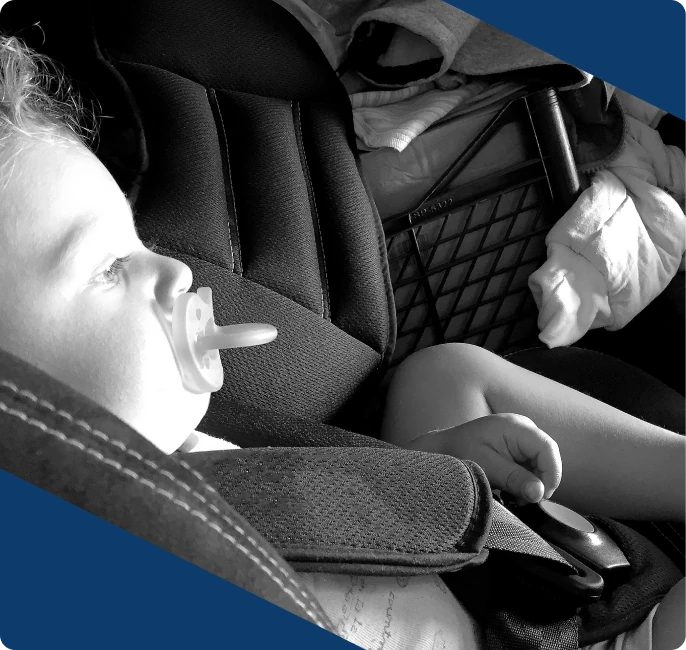
Yes, jail is a real possibility. A state jail felony is punishable by 180 days to 2 years in a state jail facility and a fine of up to $10,000 under Texas Penal Code Section 12.35 on state jail felony punishment. That does not mean every case ends with incarceration, but it does mean jail is part of the risk from day one.
The charge also puts your driver’s license at risk. Texas uses a separate administrative process to decide whether DPS will suspend your license after a DWI arrest. The State Office of Administrative Hearings explains the ALR program as a separate proceeding that decides whether a proposed suspension should be upheld. Texas implied-consent law also requires officers to warn that a refusal can lead to an automatic suspension of not less than 180 days and that, for drivers 21 or older, submitting a specimen that shows an unlawful alcohol concentration can trigger a suspension of not less than 90 days.
Then there is the practical damage. A felony DWI case can affect employment, professional licensing, housing, insurance costs, and child custody disputes. An ignition interlock device may also become part of the case as a condition of bond, an occupational license, or community supervision under Texas law. Even before the case is resolved, the fact that it is a felony changes how employers, family members, and the court view the situation.
Sometimes yes, sometimes no, and that distinction matters. The charge you are facing may already be the specific offense of DWI with a child passenger under 49.045. In some cases, the facts may also lead prosecutors to evaluate separate allegations under Texas Penal Code Section 22.041 on abandoning or endangering a child. Texas law also states that if conduct under that section constitutes another offense, a person may be prosecuted under either section or both.
Even when the arrest paperwork only lists DWI with a child passenger, the case can raise broader child endangerment concerns. Prosecutors may look closely at the surrounding facts, and those details can affect both the criminal case and any family-related fallout. That is why it helps to speak with a Dallas DWI child endangerment lawyer who can evaluate the full situation early, not just the name of the charge. An experienced DWI child endangerment attorney can look for ways to challenge the evidence, limit the scope of the case, and address problems before they become harder to control.
After a Dallas arrest, the first phase usually includes booking, magistrate review, and bond. The Dallas County Bond Administration page confirms that the county’s Bond Division processes bonds posted in Dallas County, while the Dallas County felony criminal information page explains that felony matters are handled through the district court system. If the case proceeds as a felony, Dallas County’s grand jury process can become part of the path forward, and the Dallas County grand jury page explains that an indictment is presented when the grand jury finds probable cause.
From there, the case can move through setting hearings, bond conditions, discovery, motion practice, and negotiations. Dallas County also provides online criminal case information and records access, which means felony case status and many filings can become easier to track than clients expect.
This is one place where local experience matters. A DWI with child passenger attorney in Dallas, TX should not be learning Dallas felony procedure from your case. A lawyer handling this charge needs to understand how Dallas courts address bond terms, how quickly the license issue can develop, and when to press on suppression issues before the prosecution’s version of the case hardens.
The evidence in a DWI-with-child-passenger case usually comes from several buckets at once. Prosecutors often rely on the reason for the stop, the officer’s narrative, body camera footage, field sobriety testing, statements allegedly made by the driver, breath or blood test evidence, and records showing the child’s age.
Chemical evidence matters, but it is not the whole case. Texas law specifically addresses specimen issues in DWI cases. Under Texas Transportation Code Chapter 724, officers must give warnings before requesting a specimen, and the statute also allows mandatory specimen procedures in certain circumstances. One of those circumstances is an arrest for an offense under Section 49.045. That does not mean every blood draw is beyond challenge. It means the legality of the demand, the warrant, the timing, the medical draw, and the testing process all need careful review.
An experienced DWI with child passenger defense lawyer should also test whether the stop was lawful in the first place, whether the officer had probable cause to arrest, whether the child was actually younger than 15, whether the vehicle was in a public place, and whether the State can connect every piece of evidence cleanly. A single weakness does not always win the case, but it can change plea leverage, pretrial rulings, and sentencing risk.

Sometimes it can. No honest lawyer should promise a dismissal or a reduction before reviewing the evidence, but these cases are absolutely challengeable. A defense may focus on the traffic stop, the officer’s observations, improper testing procedures, medical explanations for appearance or speech, gaps in video, chain-of-custody issues, or the State’s inability to prove one of the required elements beyond a reasonable doubt.
This is where the case needs a calm, informed response. Most people looking for a DWI with child passenger lawyer want to know whether the charge can still be challenged. In many cases, it can. The outcome depends on the stop, the arrest, the testing, and how well the State can support each part of its case.
Start by saying as little as possible about the facts of the arrest to anyone other than your lawyer. Do not try to explain the case away on the phone, by text, or on social media. Save all paperwork you received at release. Make note of exactly where you were stopped, who was in the vehicle, what testing was requested, and what happened at the scene while it is still fresh.
Then move quickly. A Dallas DWI with child passenger lawyer should be able to step in before court dates start stacking up and before the license case creates more pressure. Ask whether the attorney handles felony DWI cases, license suspension hearings, motions to suppress, and cases where the facts may raise child endangerment concerns. A strong DWI child endangerment attorney will look beyond the arrest report, preserve evidence early, and build a defense around what the State can actually prove, not just what the charge sounds like on paper.
At Dallas DWI Lawyers, we represent people facing one of the most serious DWI charges under Texas law. When a child is in the vehicle, the case can put your license, your job, your record, and your freedom at risk all at once. These cases move fast, and early decisions can affect how the evidence is preserved, how the charge is challenged, and how much leverage you have going into court.
If you were arrested for DWI with a child passenger in Dallas, get legal help as early as possible. A Dallas DWI with child passenger lawyer can review the stop, the arrest, the testing, and the facts the State plans to use against you. Contact Dallas DWI Lawyers today for a free case evaluation. That conversation can give you a clearer sense of what you are facing, what can be challenged, and what steps to take next before the case gets harder to control.

Home
About Us
Case Wins
Ebook
Testimonials
Videos
FAQs
Blog
Contact Us
2550 Pacific Ave #866,
Dallas, TX 75226, United States
Contact Us Today