
Call or text 24/7 for your FREE CASE EVALUATION CALL TODAY!
TL;DR
If you are arrested for DWI in Dallas, a breath or blood test does not automatically decide the case.
If you are searching for Breath & Blood Test Defense Lawyers in Dallas, you are probably dealing with one of the most stressful moments of your life. A failed test can feel final. It is not. In Texas, a breath or blood result is important evidence, but it is still evidence that must be collected legally, handled correctly, and explained accurately in court. A strong defense starts by looking at every step that led to that number, not by assuming the number tells the whole story.
At Dallas DWI Lawyers, we look at these cases the way they are actually built by prosecutors in Dallas County. The state may try to prove intoxication with a number over the legal limit, or it may argue that you did not have the normal use of your mental or physical faculties. That distinction matters. It shapes how a Texas DWI charge under Penal Code Chapter 49 is prosecuted, how test results are used, and where the defense is most likely to expose a weakness.
Texas law treats DWI as operating a motor vehicle in a public place while intoxicated. Under the statutory definition of intoxication, the state can proceed by claiming impairment or by relying on an alcohol concentration result. A breath test is an indirect measurement. It estimates alcohol concentration from deep-lung breath and depends on the machine, the operator, the observation period, and the assumptions built into the testing process. A blood test is a laboratory analysis of a physical sample and may also be used when police suspect alcohol, drugs, or a combination of substances. Both can be challenged for legal and scientific reasons.
Texas also has an implied consent law in Transportation Code Chapter 724. After a lawful DWI arrest, an officer may request a specimen of breath or blood. Before asking, the officer must provide specific warnings about refusal, license suspension, and the right to request a hearing. In some situations, officers can seek a warrant for blood, and in certain injury or repeat-offense situations the statute allows a required specimen if the legal conditions are met. That means the defense is never just about the final lab number. It is also about whether the request, warning, warrant, and collection process followed the law.
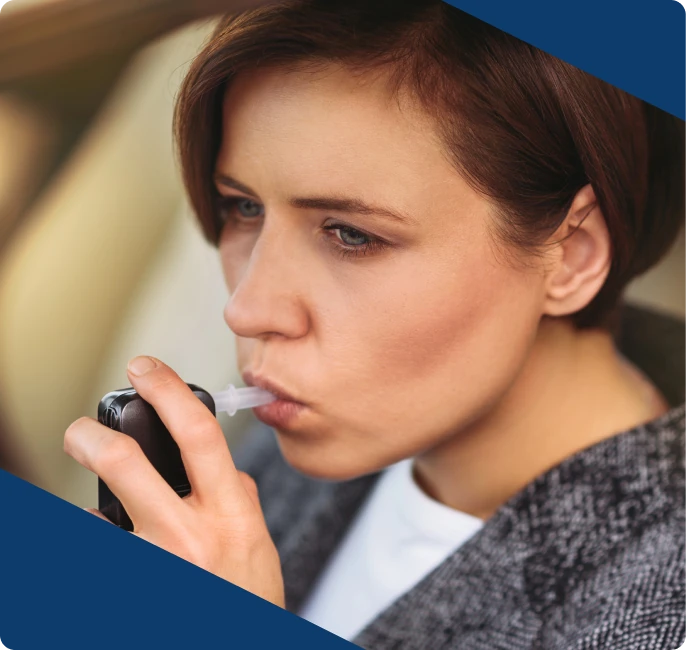
Prosecutors often present a chemical test as the cleanest part of a DWI case. If a blood or breath result is 0.08 or higher, they may argue that the case is straightforward. If the reported alcohol concentration is 0.15 or more, a first DWI can be charged as a Class A misdemeanor instead of a Class B misdemeanor. But that still does not make the evidence automatic or beyond challenge. The state must show that the test was legally obtained and that the result actually means what the prosecutor claims it means. Texas Penal Code Section 49.04 makes that clear by tying enhanced treatment to what the analysis showed, which puts the reliability of the analysis front and center.
This is one reason early legal help matters. A DWI breath and blood test lawyer does not simply read the police report and wait for court. The defense often begins by securing video, dispatch logs, maintenance records, warrant paperwork, lab packets, and chain-of-custody material before anything disappears or becomes harder to obtain. In many cases, the test result is only as strong as the paperwork and procedure behind it. That is where a thoughtful defense can change the direction of the case.
A DWI breath test defense attorney starts with the rules that govern the machine and the officer who operated it. Texas breath alcohol testing rules require approved evidential instruments, certified operators, and specific methods for administering the test. One of the most important safeguards is the continuous 15-minute observation period in the Texas breath testing regulations. The broader Texas breath alcohol testing regulations also cover instrument certification and operator certification. If those requirements were not met, the defense has a real issue to raise.
A breath test defense lawyer also looks at whether the machine was properly certified, whether the operator was current on certification, whether the subject was observed long enough, and whether mouth alcohol, burping, regurgitation, illness, or timing could have affected the reading. A Dallas breath test defense lawyer may also challenge a result that was taken well after driving, because alcohol absorption is not static. In the right case, the reported number may say more about your body in the testing room than it does about your condition when you were actually behind the wheel. A Dallas DWI breath test defense attorney should also examine whether police skipped details that look small on paper but matter greatly in court.
Many people assume blood is harder to fight because it sounds more scientific. Sometimes it is stronger evidence. It is not untouchable evidence. A DWI blood test defense attorney looks closely at how the sample was obtained, who authorized it, whether a warrant existed, whether probable cause was established, and whether the sample was collected and processed according to law. In Texas, Code of Criminal Procedure Article 18.067 on blood-specimen warrants and the implied consent statutes can become central to the case. A Dallas DWI blood test defense attorney may find that the problem is not the science alone, but the legal path used to get the sample in the first place.
A blood test defense lawyer also examines storage, transport, labeling, chain of custody, delays between driving and draw, and how the lab interpreted the result. Texas law gives the person tested the right to obtain full information concerning the analysis of the specimen. That matters because raw data, lab notes, and handling records may reveal a weakness that never appears in the short summary a prosecutor first hands over. A Dallas blood test defense lawyer will often focus on whether the state can prove that the sample tested by the lab is the same sample taken from the driver, in the same condition, with reliable documentation all the way through.
In Dallas, a DWI arrest often creates two problems at once: the criminal case and the driver’s license case. On the criminal side, misdemeanor DWI matters typically move through the county criminal court system. The Dallas County Criminal Courts Division is located at the Frank Crowley Courts Building at 133 N. Riverfront Boulevard, and Dallas County states that its eleven county criminal courts hear Class A and B misdemeanor offenses. Public case information is available through the Dallas County court records portal.
On the release side, bond conditions can become a serious part of the burden. Dallas County Pretrial Services operates out of the Frank Crowley Courts Building and includes an Alcohol Monitoring Unit for defendants released on bond with alcohol-monitoring conditions. That matters in real life. Even before the criminal case is resolved, a person may be dealing with court dates, monitoring requirements, work problems, transportation issues, and pressure to make quick decisions without all the evidence in hand.
The license issue moves fast. Under Transportation Code Section 724.015 on warnings before a specimen request, a person generally has 15 days to request a hearing after receiving notice of suspension or denial. If you wait too long, you can lose an important chance to challenge the suspension and gather testimony early. That deadline is one of the biggest reasons you should start looking for a Dallas DWI blood or breath test defense attorney within days of the arrest, not weeks later.
A first-offense DWI in Texas is commonly charged as a Class B misdemeanor, with a statutory minimum term of confinement of 72 hours. If the analysis shows 0.15 or more, the charge can be treated as a Class A misdemeanor. Separate from the criminal case, refusal can trigger an automatic license suspension of at least 180 days, and a test over the legal limit can trigger a suspension of at least 90 days for drivers 21 and older. These are baseline legal consequences, and the practical fallout often reaches further into employment, insurance costs, professional licensing, travel, and reputation.
That is why the result on paper should never be treated as the end of the conversation. A prosecutor may see a number. A careful defense looks at the stop, the officer’s observations, field sobriety testing, the specimen request, the warnings, the timing, the machine or lab work, and whether the state can actually connect all of it into a case that holds up under scrutiny. For some clients, the best path is attacking admissibility. For others, it is reducing the weight of the test, exposing uncertainty, or creating a negotiating room that would not exist without a deep review.
The sooner the defense starts, the more options usually exist. A DWI breath test defense attorney can move quickly to obtain maintenance logs, operator records, body camera footage, and observation details before memories fade. A DWI blood test defense attorney can demand analysis records, review the warrant, assess the draw process, and preserve issues tied to timing and chain of custody. The right DWI breath and blood test lawyer is not waiting for the trial to begin building the case. The work starts now, while the evidence is still fresh and the state is still assembling its version of events.
At Dallas DWI Lawyers, we take a close, practical look at the evidence, the arrest, and the testing process to find what the state may have gotten wrong. Breath and blood test cases often turn on details that are easy to miss early, including timing, procedure, and whether the evidence will hold up under scrutiny. A careful review can shape the defense from the start and help you make informed decisions about what comes next. Contact Dallas DWI Lawyers for a Free Case Evaluation.
Yes. Texas breath testing rules require a continuous 15-minute observation period before the test, and the instrument must be operated by a certified operator or technical supervisor. Those rules matter because the defense can examine whether the required steps were actually followed in the case.

Home
About Us
Case Wins
Ebook
Testimonials
Videos
FAQs
Blog
Contact Us
2550 Pacific Ave #866,
Dallas, TX 75226, United States
Contact Us Today